Skip to Main

Join Aspen Rewards - FREE SHIPPING & DISCOUNTS

Bundle: Evidence: A Structured Approach, Sixth Edition with The Glannon Guide to Evidence, Third Edition and Connected Quizzing

Authors
  • David P. Leonard
  • Victor J. Gold
  • Gary C. Williams
  • Kevin Lapp
  • Michael Avery
Series / Aspen Bundle Series
Description

Bundle: Print + eBook + Learning Assessment - This bundle includes both print and digital versions of ISBN 9798889062639, a print version of ISBN 9798886140637 as well as Connected Quizzing, ISBN 9781543814491.

The unique structured approach of Evidence: A Structured Approach, Sixth Edition facilitates learning and incentivizes students to prepare for class. One Federal Rule of Evidence introduces each section, followed by text explaining the background, rationale, and details of the rule. The text includes numerous diagrams as visual aids to learning and short transcripts that illustrate how the rules are applied in the courtroom. The authors emphasize the rules over cases, but include a few edited versions of the seminal cases that every lawyer should know. The heart of the “structured approach” is the Questions for Classroom Discussion, which follow the narrative explanation for each rule. These questions consist of simple hypothetical cases allowing for a step-by-step analysis of each section of the pertinent rule. Because students know what questions the professor will ask in class, they quickly learn that preparation pays off. The book’s website allows students to download the questions directly into their notes before class, freeing students to spend more time thinking and less time typing.

The Glannon Guide to Evidence provides a practical, and theoretically solid, aid to learning the Federal Rules of Evidence. Straightforward explanations of the Rules and illustrative examples in down to earth language provide a supplement to an Evidence class that will remove any confusion as to how the Rules should be interpreted. Based on decades of trying cases and classroom teaching, Prof. Avery is familiar with the most common mistakes lawyers and students make in applying the Rules and has designed these materials to highlight typical errors and correct them. Each multiple-choice question has tempting, but incorrect, answer choices, and then an explanation in simple and direct language that clarifies the rule. The student who works through these questions will be well prepared for Evidence exams and courtroom challenges.

Bundle also includes Connected Quizzing. Delivered through CasebookConnect.com, Connected Quizzing is an easy-to-use formative assessment tool that tests law students’ understanding and provides timely feedback to improve learning outcomes. Connected Quizzing requires a Professor Course Code to access the quizzes.


Read More
Professor Materials
Please sign in or register to view Professor Materials. These materials are only available for validated professor accounts. If you are registering for the first time, validation may take up to 2 business days.
About the authors
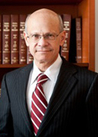
David P. Leonard
Loyola Law School

Professor David P. Leonard, associate dean for research and longtime member of the faculty at Loyola Law School, passed away in February 2010. Professor Leonard joined the Loyola faculty in 1990 and was appointed associate dean for research in 2008. He was an immensely popular professor with students, faculty, and staff alike. Professor Leonard loved teaching and was dedicated to his students. The graduating class of 2009 presented him with the Excellence in Teaching Award.

Professor Leonard's efforts as associate dean helped raise Loyola's scholarly profile. And he did all this with a constant smile as he battled cancer. David was not only a colleague but also a dear friend, said Dean Victor Gold, who co-authored Evidence: A Structured Approach with Professor Leonard.

At Loyola, Professor Leonard taught the Advanced Evidence Seminar, Evidence, and Torts. In addition, he was a prolific scholar. His books include The New Wigmore: A Treatise on Evidence: Evidence of Other Misconduct and Similar Events and Evidence Law: A Student's Guide to the Law of Evidence as Applied in American Trials. His many law review articles appeared in the U.C. Davis Law Review, the North Carolina Law Review, the Southern California Law Review, the University of Colorado Law Review, the Hastings Law Journal, and the Indiana Law Journal, among others.

Before joining the Loyola faculty, Professor Leonard was a member of the faculty at the Indiana University School of Law and a lecturer-in-law at UCLA School of Law, where he received his Juris Doctor. Professor Leonard received his bachelor's degree with highest honors from the University of California, San Diego.

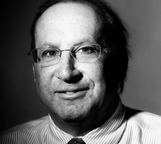
Victor J. Gold

Professor Victor Gold joined Loyola’s faculty in 1984 and was named the 16th Dean of Loyola Law School and Senior Vice President of Loyola Marymount University in January 2009 after spending a year as interim dean. He retired from the position of Dean in June 2015 and returned to full-time teaching.

During his tenure as Dean, Loyola’s endowment grew by over 75%, and the school added five new academic chairs and dozens of endowed scholarships. The Law School also expanded clinical opportunities for students and its public interest program, establishing the Project for the Innocent, the Immigrant Justice Clinic, the Capital Habeas Litigation Clinic, the Employment Rights Clinic, the International Human Rights Clinic, and the Taxpayer Appeals Assistance Clinic, among others. The Law School started The Fashion Law Project, the Alarcón Advocacy Center, the Semester-in-Practice Program, and the Advocacy Institute. Loyola created the Intersession and the Academic Success program. Loyola’s graduates achieved one of the highest bar pass rates in California. Loyola launched four new graduate-degree programs and a new joint-degree program. The number of post-graduate judicial clerkships increased dramatically, as did support for diversity programs.

Professor Gold is the author of several books on the Federal Rules of Evidence. He has also written numerous articles on evidence law and advocacy. Widely considered one of the country’s top experts in evidence law, Professor Gold served as a CBS News legal analyst from 1994-97. He taught in Loyola’s LLM program at the University of Bologna, Italy, in 2006 and is a fellow at Wolfson College, Cambridge University, England. Dean Gold earned an Excellence in Teaching Award from the graduating class of 2007. He is a member of the American Law Institute.

Prior to teaching at Loyola, Dean Gold was a tenured law professor at Arizona State University and an associate at Nossaman LLP in Los Angeles, where he declined an offer to become a partner to pursue his teaching career. He graduated Order of the Coif from UCLA School of Law, where he was an editor of the UCLA Law Review.

Selected Scholarship

  • Evidence, A Structured Approach (Aspen Publishing) (4th ed., forthcoming 2016)

  • Federal Practice and Procedure, Volume 29 (West) (2d ed., forthcoming 2016)

  • Federal Practice and Procedure, Volume 28 (West) (2d ed., 2012)

  • Federal Practice and Procedure, Volume 27 (West) (2007)

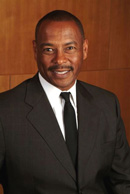
Gary Williams
Loyola Law School, Los Angeles

BA, University of California Los Angeles JD, Stanford University

Gary Williams was staff counsel for the Agricultural Labor Relations Board from 1976-79 and staff attorney for the American Civil Liberties Union Foundation of Southern California from 1979-85. Williams was appointed assistant legal director of the American Civil Liberties Union Foundation of Southern California in 1985, a position he maintained until joining the Loyola Law School faculty in 1987.

Kevin Lapp
Professor
Loyola Marymount University

Kevin Lapp's scholarship critically examines the special place of children and adolescents in the law. His work has explored the evolving scope of Fourth and Fifth Amendment protections and their application to juveniles, the expansion of the modern culture of dataveillance to youth, and the right of child litigants to counsel. Lapp also considers the ways that nations define and regulate membership, and examines the results of countries incorporating punitive criminal justice norms into immigration law. Before joining the Loyola faculty, Professor Lapp taught at the New York University School of Law. He spent four years at the Legal Aid Society of New York City in the Juvenile Rights Practice, representing young people in juvenile delinquency and child welfare proceedings. He clerked for the Honorable A. Howard Matz in the Central District of California. Professor Lapp has been a visiting professor at UCLA School of Law. Professor Lapp was awarded the Excellence in Teaching Award in 2018 by the graduating class.

Michael Avery

After beginning as an ACLU staff lawyer during the Black Panther murder trial in New Haven in 1970, Michael Avery enjoyed a career over four decades as a civil rights and criminal defense lawyer. On the civil side, he represented the victims of police abuse and racial and sexual discrimination. In criminal cases, he defended people charged with everything from peaceful protesting to murder. In Boston in 2007, working with a team of lawyers, he obtained the largest judgment ever awarded against the FBI, $101.7 million, for the wrongful conviction of four innocent men for murder. His client, Peter Limone, had spent 33 years in prison for a murder of which he was innocent. The crime was actually committed by an FBI informant.     He has served as the President of the National Lawyers Guild and is one of the founders and a past president of the National Police Accountability Project. He enjoyed a sixteen-year career as a law professor at Suffolk Law School in Boston, where he is now professor emeritus. He has published several non-fiction books, including The Federalist Society: How Conservatives Took the Law Back from Liberals, We Dissent: Talking Back to the Rehnquist Court, Handbook of Massachusetts Evidence, and Police Misconduct: Law and Litigation. He has published three novels: The Cooperating Witness, Murder in Blue, and Mama’s Boy. He is a graduate of Yale College and Yale Law School and spent a year as an exchange student in the former Soviet Union at the University of Moscow. After retiring as a professor of law, he obtained a Master of Fine Arts from Bennington College. He resides in Albuquerque, New Mexico.

Product Information
Publication date
2025-05-12
Copyright Year
2025
Bundle: Print + eBook + Learning Assessment
9798899630514
Subject
Evidence
Select Format Show Hide
Select Format Hide
Are you an educator?